
Guide
Massage Health Benefits: What the Evidence Actually Shows
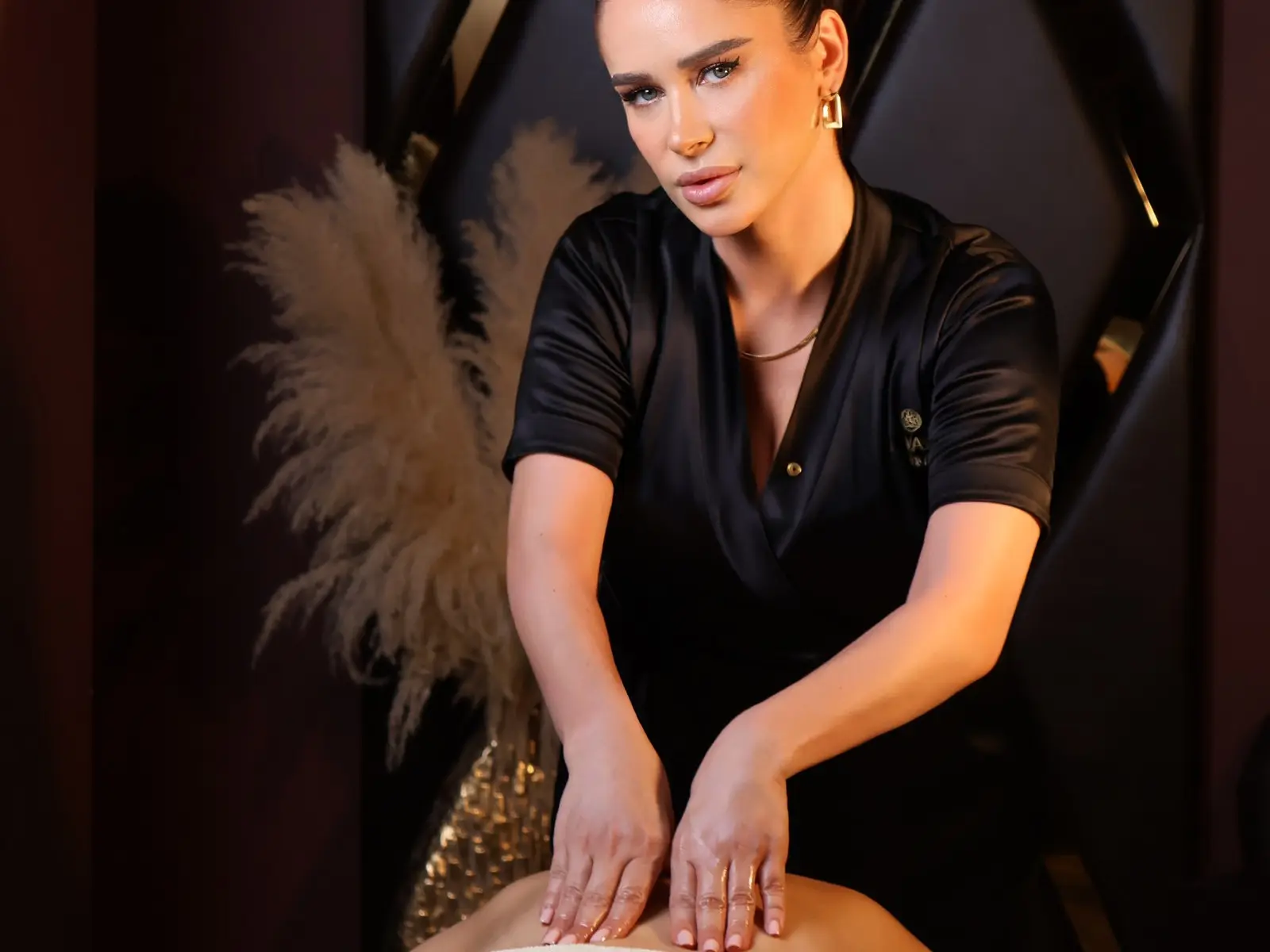
Go looking for proof that massage improves your health and you will find plenty of confident claims. Look for the studies behind them and the picture gets more interesting, and more useful. The research is real. It is also more modest, more short-lived and less certain than most of what you will read, and knowing which is which changes what you book and what you expect from it.
Key Takeaways
- The claim that massage lowers your stress hormone does not hold up. Pooled evidence puts the effect on cortisol at “very small” and usually indistinguishable from zero.
- For low back pain, Cochrane reviewers reported “very little confidence” that massage is an effective treatment, with benefits only in short-term follow-up.
- Recovery after hard exercise is the best-supported use: soreness measurably down at 24, 48 and 72 hours.
- Session length and frequency appear to matter more than which technique you pick.
The cortisol story is the weakest part of the pitch
Almost every spa page explaining why massage helps with stress reaches for the same mechanism: it lowers cortisol, the body’s main stress hormone. It is a tidy story. It is also the claim that has aged worst.
In 2011 a team led by Christopher Moyer set out to settle the question by pooling every usable trial on massage and cortisol. Their conclusion is blunt: massage therapy’s effect on cortisol “is generally very small and, in most cases, not statistically distinguishable from zero” (Moyer et al., Journal of Bodywork and Movement Therapies, 2011;15(1):3-14).
Read that carefully, because it’s easy to over-correct. It doesn’t say massage fails to relax people. People report feeling calmer after a massage consistently enough that it barely needs studying. What collapsed is the explanation, not the experience.
That distinction is worth holding onto, because it tells you what you are actually buying. An hour where nobody can reach you, in a warm room, with someone paying careful attention to the parts of you that hurt, is a real thing with a real effect on how the rest of your day goes. It doesn’t need a hormone to justify it, and a spa that insists on the hormone is telling you something about its sourcing rather than about your body.
Back pain: some help, briefly, on shaky evidence
Low back pain is the reason more people book a massage than any other, so it has been studied more than most.
The reference point is the Cochrane review, which pooled 25 randomised trials covering 3,096 people. Cochrane reviews are deliberately hard to please, and this one is no exception. The authors’ conclusion, in their words: “We have very little confidence that massage is an effective treatment for LBP” (Furlan et al., Cochrane Database of Systematic Reviews, 2015, CD001929).
The detail underneath is more nuanced than the headline. Pain outcomes did improve, across acute, sub-acute and chronic back pain, but only at short-term follow-up. Function improved for sub-acute and chronic pain compared with doing nothing, again only in the short term. And the reviewers rated the quality of the evidence itself as “low” to “very low”, downgrading it for risk of bias and imprecision.
Some of that uncertainty is a design problem rather than a treatment problem. You can’t blind someone to whether they’re receiving a massage, which makes rigorous trials genuinely hard to run. But an honest reading is still an honest reading: a massage may take the edge off this week. Nobody should sell it to you as a fix.
One thing the review did settle in massage’s favour: adverse effects were minor.
Where the evidence is strongest: recovery after hard training
If you want the use with the cleanest support behind it, it isn’t stress and it isn’t chronic pain. It is the soreness that arrives a day after you train hard.
A 2017 meta-analysis pooled 11 randomised trials covering 504 people and measured delayed onset muscle soreness at fixed intervals after strenuous exercise. Massage reduced soreness at every one of them, and the effect was largest at 48 hours (Guo et al., Frontiers in Physiology, 2017;8:747).
| Measured at | Effect on soreness (SMD) | Significance |
|---|---|---|
| 24 hours after exercise | -0.61 | P = 0.03 |
| 48 hours after exercise | -1.51 | P < 0.001 |
| 72 hours after exercise | -1.46 | P = 0.01 |
| Pooled across timepoints | -1.16 | P < 0.001 |
Two things make this stronger than the rest of the literature. The soreness findings were backed by a blood marker rather than resting on self-report alone: creatine kinase, which rises with muscle damage, fell as well (SMD -0.64, P = 0.001). And measures of performance moved in the right direction, with maximal isometric force and peak torque both improving.
The practical version is narrow and worth stating as such. This is evidence about recovering from exercise you have already done, not about replacing it, and the studies looked at massage in the days after strenuous effort rather than at a monthly treat. Book the day after a heavy session and you are on the firmest ground the research offers.
Dose looks more important than technique
Buried in the NCCIH summary of neck pain research is the most practically useful sentence in this whole area. Reviewing the evidence, the US National Center for Complementary and Integrative Health notes that massage could provide short-term relief of neck pain “if massage sessions were long enough and frequent enough” (NCCIH, Massage Therapy: What You Need To Know).
That is a finding about dose, not about method. It suggests the choice most people agonise over, which named technique to pick, matters less than two choices they make casually: how long to book, and whether to come back.
It also matches what therapists see. Sixty minutes covering the whole body means every region gets attention and none of it gets long. If one area is the reason you booked, ninety minutes is the length where that area actually gets worked rather than visited.
In Dubai there is a second, duller factor in the same direction. Traffic and heat mean that the last twenty minutes of an hour-long booking are often the first twenty minutes you have genuinely stopped moving. Booking the longer session buys back the time the journey took.
At Lavana Spa the ninety minute European Aromatherapy or Purifying Swedish Massage is 700 AED at Al Barsha and Bur Dubai, with 5% VAT added at reception. An appointment starting between 10:00 and 15:00 is charged at the Early Bird rate instead, which brings the same ninety minutes to 550 AED. The DIFC branch runs its own menu with its own figures, from a thirty minute back, neck and shoulder up to two hours.
Where the evidence thins out
Some benefits attributed to massage sit on much less than the ones above, and a few sit on nothing at all.
Knee osteoarthritis is somewhere in the middle. The NCCIH notes that of six studies covering 408 people, five found short-term pain relief, which is encouraging and still a small literature. Anxiety in specific clinical populations shows a similar pattern: signals in the right direction, small samples, evidence the reviewers themselves rate as very low quality.
Then there is the category that gets repeated most and supported least. Massage doesn’t detoxify you: that job belongs to your liver and kidneys, and no manual technique changes their throughput. It doesn’t reverse skin ageing. It isn’t a treatment for arthritis, tendonitis or any other diagnosis, and any page telling you it will reduce your need for pain medication is making a medical claim it has no standing to make.
Leaving those out costs the case for massage very little, because what remains is genuinely worth having.
Before you book: who should check with a doctor first
The NCCIH puts the overall risk of harm from massage as low, and the Cochrane back pain review found only minor adverse effects. Both are worth knowing. So is the qualifier the NCCIH attaches: there have been rare reports of serious side effects including blood clots, nerve injury and bone fracture.
Speak to your doctor before booking if you are pregnant, take blood thinners or have a bleeding disorder, have osteoporosis or a recent fracture, have had a deep vein thrombosis, or are undergoing cancer treatment. Tell reception when you book and tell your therapist before the session starts, rather than partway through it.
And the rule that matters more than any of the above, stated plainly by the NCCIH: do not use massage to postpone seeing a health care provider about a medical problem.
What a fair summary looks like
Massage is well supported for helping you recover from hard exercise. It offers modest, short-lived help with pain, on evidence that reviewers themselves describe as low quality. It reliably makes people feel better, for reasons that are not the hormonal ones commonly advertised. It doesn’t detoxify, rejuvenate or treat disease.
That’s a smaller claim than the one on most spa websites. It’s also the one that survives contact with the research, and it is enough.
Sources
- Moyer CA, Seefeldt L, Mann ES, Jackley LM. Does massage therapy reduce cortisol? A comprehensive quantitative review. Journal of Bodywork and Movement Therapies. 2011;15(1):3-14. doi:10.1016/j.jbmt.2010.06.001
- Furlan AD, Giraldo M, Baskwill A, Irvin E, Imamura M. Massage for low-back pain. Cochrane Database of Systematic Reviews. 2015;(9):CD001929. doi:10.1002/14651858.CD001929.pub3
- Guo J, Li L, Gong Y, Zhu R, Xu J, Zou J, Chen X. Massage alleviates delayed onset muscle soreness after strenuous exercise: a systematic review and meta-analysis. Frontiers in Physiology. 2017;8:747. doi:10.3389/fphys.2017.00747
- National Center for Complementary and Integrative Health. Massage Therapy: What You Need To Know. US National Institutes of Health.
This article is general information, not medical advice. Retrieved sources checked 11 August 2026.
Good to Know
Questions about this
Does massage really lower cortisol?+
Probably not in the way the internet says. The most thorough review of the question pooled the available trials and concluded that massage therapy's effect on cortisol is generally very small and, in most cases, not statistically distinguishable from zero (Moyer et al., Journal of Bodywork and Movement Therapies, 2011). That matters because the cortisol story is the mechanism nearly every spa website leans on to explain why massage helps with stress. The honest position is that people reliably report feeling calmer after a massage, and that the hormonal explanation for it has not held up. Feeling better is the outcome you are actually buying, and it does not need a hormone to justify it. Treat any page that promises a measured drop in your stress hormone as marketing rather than science. If calm is what you are booking for, judge the session by how you feel walking out, because that is the only measure anyone has actually demonstrated.
Will a massage fix my back pain?+
It may help for a while, and the research is honest about how modest that is. The Cochrane review of massage for low back pain pooled 25 randomised trials covering 3,096 people and concluded that the authors have very little confidence that massage is an effective treatment for it. Improvements in pain showed up only at short-term follow-up, and the reviewers rated the overall quality of the evidence as low to very low. So a session can genuinely take the edge off this week. It is not a treatment for a structural problem, and it is not a substitute for seeing a doctor. If your back pain is sharp, recent, following an injury, or comes with numbness or weakness in a leg, get it looked at properly before booking anything. Within those limits, tell the therapist where it hurts and how much pressure feels safe: the session can be worked around a sore area as easily as through it.
What is massage actually well supported for?+
Recovery after hard exercise has the cleanest evidence of anything on this list. A meta-analysis of 11 randomised trials covering 504 people found that massage after strenuous exercise reduced delayed onset muscle soreness at 24, 48 and 72 hours, with the largest effect at 48 hours, and also lowered creatine kinase, a blood marker of muscle damage (Guo et al., Frontiers in Physiology, 2017). Measures of muscle performance improved too. If you train hard and book a massage a day or two afterwards, that is the use with the most support behind it. Note what this does not say: it is about recovery from exercise you already did, not about replacing the exercise. At Lavana Spa that use pairs naturally with the Deep Muscle or the Purifying Swedish massage, on the menu at Al Barsha and Bur Dubai from 600 and 500 AED an hour respectively.
How long should I book to get any benefit?+
Longer than you might think, and more than once. Reviewing the evidence on neck pain, the US National Center for Complementary and Integrative Health notes that massage could provide short-term relief if sessions were long enough and frequent enough. That is an unusually practical finding: dose appears to matter more than technique. In practice it argues for ninety minutes over sixty if a specific area is the reason you are booking, and for a repeat visit rather than a one-off. At Lavana Spa the ninety minute European Aromatherapy or Swedish massage is 700 AED at Al Barsha and Bur Dubai, or 550 AED when the appointment starts before 15:00. DIFC prints the same lengths on its own ladder, with VAT already inside the figures. Whichever branch you pick, length is the lever the evidence points at: decide the minutes first, and the rest follows.
Is there anyone who should not book a massage?+
Yes, and it is worth saying plainly rather than in small print. The NCCIH puts the overall risk of harm from massage as low, but records rare reports of serious side effects including blood clots, nerve injury and bone fracture. Talk to your doctor first if you are pregnant, have a bleeding disorder or take blood thinners, have osteoporosis or recent fractures, have had a deep vein thrombosis, or are having cancer treatment. Tell reception and your therapist about any of these when you book rather than when you are on the table. The other rule is the one the NCCIH states directly: do not use massage to postpone seeing a health care provider about a medical problem. The advice from our team page applies doubly here: mention pressure preferences and any oil reactions in the first message, so the plan is set before you are on the table rather than halfway through the hour.